

Why health change so often fails
Most people struggling with their health don’t lack information. They know what they’re “supposed” to eat. They understand that movement matters. They’ve heard (many times) about sleep, stress, and balance. Yet despite this knowledge, lasting change remains frustratingly out of reach. When this happens, the explanations tend to sound familiar: lack of motivation, poor discipline, emotional eating, non-compliance. Each contains a sliver of truth, but none explains the whole picture.
The deeper issue is this: Health transformation isn’t just behavioural. It’s developmental.
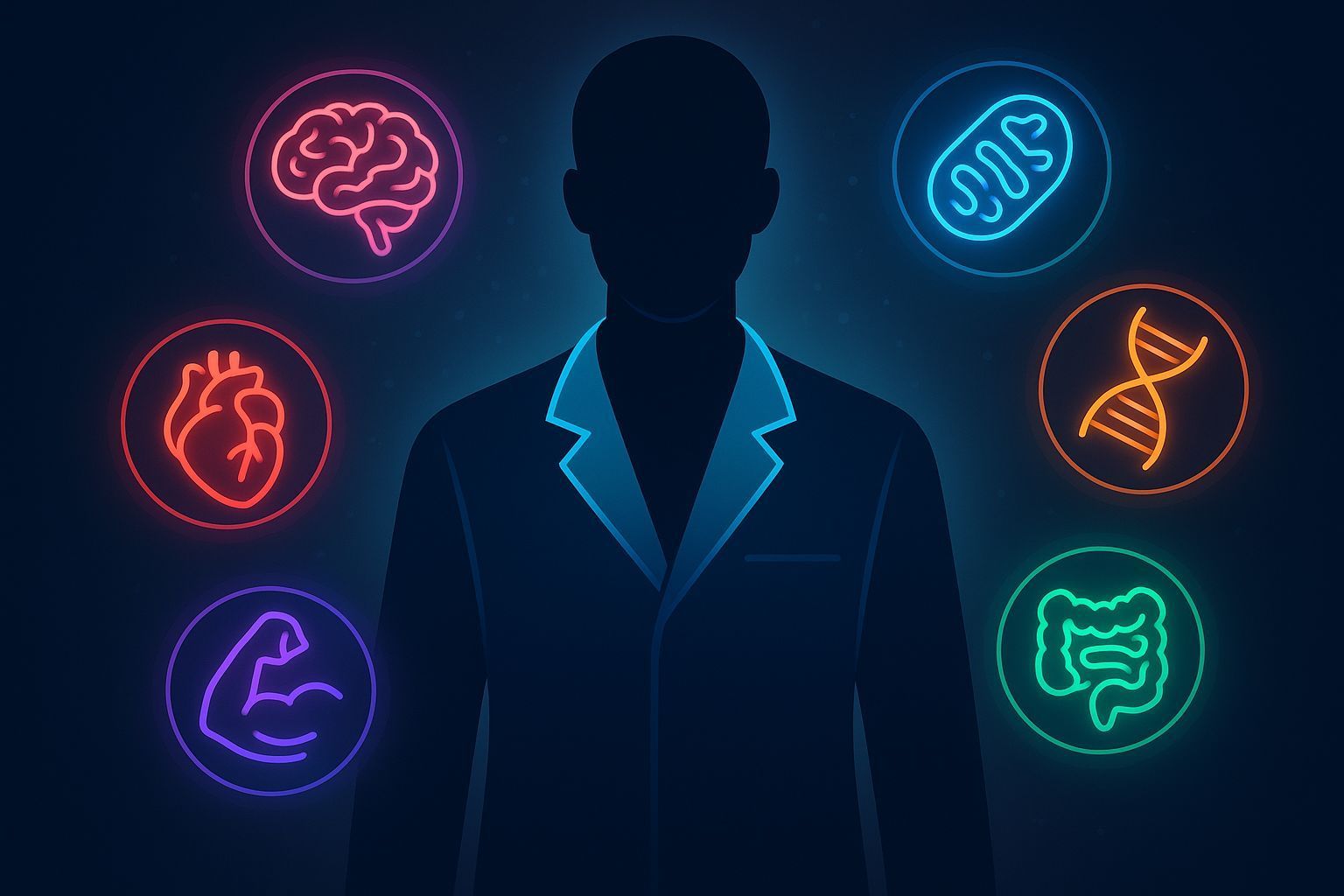
At Simplr Health, we see sustainable change not as a battle of willpower, but as the co-evolution of biology and meaning. How your body is functioning - metabolically, neurologically, immunologically, even microbially - directly shapes how you perceive reality, regulate emotion, make decisions, and relate to effort, authority, autonomy, and uncertainty.
In other words, biology doesn’t just influence health outcomes.
It shapes how change itself becomes possible.
This article explores a biophenomenological model of health transformation - one that integrates physiology with human development - and explains why people change when they do, why they regress under stress, and how health programs can be designed to work with human biology rather than against it.
Capacity comes before choice
One of the most persistent assumptions in health education is that once people are informed, they can freely choose better behaviours. Biology tells a different story — Human decision-making capacity is constrained by factors such as:
• Energy availability and metabolic flexibility
• Stress hormone balance
• Neurotransmitter function
• Inflammatory and immune signalling
• Gut–brain microbial communication
When these systems are dysregulated, higher-order capacities such as planning, impulse control, reflection, and long-term thinking, all become biologically unavailable. In these states, people aren’t “choosing badly.” They literally cannot access better choices.
From a biophenomenological perspective: Behaviour reflects the state of the organism, not the strength of will.
This reframes health change entirely. Expecting psychological sophistication from a biologically stressed system is unrealistic. True transformation begins by restoring physiological capacity first.
How meaning emerges from life conditions
Humans don’t just act; we interpret. We organise our experience through evolving frameworks of meaning - how we relate to authority, responsibility, identity, time, risk, and value.
These frameworks aren’t arbitrary beliefs. They emerge as adaptive responses to life conditions. When conditions feel threatening or unstable, meaning narrows. People seek certainty, control, rigid rules, or immediate relief. As conditions stabilise and resources increase, meaning expands… toward autonomy, nuance, relational awareness, and eventually systems-level thinking.
Biology is one of the most powerful life conditions shaping this process. A nervous system locked in chronic stress favours rigid thinking or impulsive reaction. A metabolically stable organism - adequately fuelled, well-rested, and immunologically regulated - can tolerate ambiguity, delay gratification, and think long-term.
Health behaviour change, then, isn’t a leap from “bad habits” to “good habits.” It’s a progression through increasing biological and cognitive capacity.
The developmental arc of health behaviour
1. Stabilisation: restoring safety first
When metabolism is unstable (perhaps through hypoglycaemia, insulin resistance, chronic inflammation, or sleep deprivation) the body prioritises survival. Hunger feels urgent. Emotions become reactive. Planning becomes difficult.
Health behaviour at this stage is often inconsistent and crisis-driven, frequently accompanied by shame.
The most effective intervention here isn’t education. It’s stabilisation.
That means restoring predictable energy, calming inflammatory signals, improving sleep, and establishing reliable routines. Therefore Simplr Health often begins with structured nutritional strategies, including very low-carbohydrate or ketogenic approaches - not as ideology, but as physiological triage.
When energy becomes reliable, behaviour becomes governable.
⸻
2. Structure: calming biology through order
As stability improves, many people naturally respond best to structure. Clear rules reduce cognitive load. Routine lowers stress hormones. Trusted authority provides containment.
At this stage, people benefit from things like defined meal structures, regular schedules, and non-negotiable foundations. This isn’t rigidity for its own sake. It’s scaffolding.
Structure allows the body to experience safety long enough for deeper repair to occur - mitochondrial efficiency improves, immune signalling quiets, and prefrontal regulation strengthens.
Many health programs fail by encouraging “flexibility” too early, well before stability has truly taken hold.
⸻
3. Agency and optimisation: ownership emerges
With improved metabolic flexibility and neurological resilience, something interesting happens. People want agency.
They ask why. They want to measure progress. They’re curious about personalisation. This is where data, testing, and education become powerful rather than overwhelming.
Biomarkers, training metrics, nutrient optimisation, and controlled experimentation all have a place here. When grounded in prior stabilisation, this phase produces genuine empowerment instead of obsession.
At Simplr Health, we support this stage through education and iterative refinement - always anchored to biological signals rather than ideology.
⸻
4. Integration: regulation before optimisation
As nervous system tone improves and inflammatory burden decreases, many individuals experience a shift. Health becomes less about control and more about relationship… with their body, with food, with movement, and with stress.
Physiologically, this aligns with improved parasympathetic activity, reduced inflammation, greater microbiome diversity, and enhanced emotional regulation.
Behaviour becomes more intuitive, but not careless. Compassion replaces self-punishment. Sustainability replaces short-term wins.
This is where trauma-informed coaching and contextual flexibility become essential. Without earlier stabilisation and structure, however, this phase often collapses into permissiveness rather than integration.
⸻
5. Adaptive mastery: health as capacity, not identity
At the highest level of health maturity, people no longer rely on fixed programs. They adapt intelligently to context.
They can use structure when needed and release it when not. They can fast or feast intentionally, train intensely or rest deeply, and interpret data without being ruled by it.
Biologically, this reflects true resilience: metabolic flexibility, immune discernment rather than suppression, robust mitochondrial signalling, and a microbiome capable of perturbation and recovery.
Health here isn’t an identity.
It’s a capacity.
Why regression isn’t failure
One of the most misunderstood aspects of health behaviour is regression. Relapse is often interpreted as moral failure, but, it’s usually physiological.
Low blood glucose increases impulsivity. Chronic inflammation biases the brain toward threat. Hyperinsulinemia promotes cognitive rigidity. Sleep deprivation suppresses executive function.
Under biological stress, people temporarily lose access to higher-order capacities. Expecting consistent “good behaviour” in these conditions is unrealistic.
Effective health systems anticipate regression, normalise it, and design return pathways - not punishments.
The microbiome: a silent regulator of perception
The gut microbiome plays a powerful role in neurotransmitter production, immune signalling, and vagal tone. Dysbiosis increases endotoxin exposure, amplifying stress reactivity and narrowing cognitive bandwidth.
Conversely, microbial diversity and short-chain fatty acid production support emotional regulation, improved prefrontal function, and greater tolerance for ambiguity.
In practical terms, repairing the gut expands not just physical health, but psychological and behavioural capacity as well.
Rethinking health practice
This integrated view explains why information alone rarely produces change, why one-size-fits-all programs fail, why shame backfires, and why biology must lead psychology.
At Simplr Health, our biophenomenological approach is designed to restore biological capacity, provide developmentally appropriate structure, cultivate informed agency, support integration, and ultimately enable adaptive mastery.
Each phase includes the previous one. Its telescopic. Nothing is discarded as one progresses and develops.
Health as human development
Health transformation isn’t about becoming more disciplined. It’s about becoming more capable: biologically, neurologically, emotionally, and cognitively.
When physiology stabilises, perception widens.
When perception widens, choice improves.
When choice improves, health becomes self-reinforcing.
Seen this way, health isn’t a program to follow.
It’s a developmental process to support.
And when biology and meaning evolve together, transformation stops being fragile and starts becoming inevitable.
Dean Kilby is the Founder and CEO of Simplr Health, an organization dedicated to helping people understand the true science of preventative and regenerative medicine, and apply it in daily life through education, self-awareness, and evidence-based practice.
Our recent Posts
View Other Blogs





Browse and read our blogs to learn more about our tips and tricks.